
The Dice — 044
Friday morning I was greeted in a meeting with, "welcome to the Upside Down." A reference to how quiet and sometimes stupid this time of year is if you're trying to get anything done. Between now and the second week of January is the worst time for getting anyone's attention. I used to get frustrated by it; now I tuck in.
Meeting people where they are develops empathy for users, customers, clients, colleagues, and peers. Between now and the beginning of the new year, a lot of people are focused on retreat in an effort to reflect and recharge. Be mindful of that not only for them, but especially for yourself. Times might be tough, but they only get worse when you’re doom scrolling or emailing into the void. Use this time to get your own rest and get ready to get ready so to speak.
I don’t care who you are or what you do, 2025 has been rough on everyone. So give yourself a break and enjoy the quiet however you can.
Happy New Year to us all. We deserve it.

I had a feeling I would enjoy the new documentary Breakdown: 1975 on Netflix, but I didn't expect how directly it speaks to our current conditions. The film “explores how, for one brief shining moment, Hollywood was dominated by directors who held a mirror to the corruption and greed infecting American life. The chaos of the era was captured in films that challenged the collective consciousness in real time.”
Once you get about halfway through, the depictions of events from that era feel disturbingly current—if not for the grainy film quality and the youthful images of the actors, you'd think you were watching footage from today.
Back in July, I wrote about how we're stuck in the same fuckity-fuck cycle as the 1970s—political paralysis, economic stagnation, cultural flatness, beige everything. It was interesting to watch this documentary confirm this perspective. The parallels aren't metaphorical, they're structural. We're living through the same pattern of institutional breakdown, and filmmakers in the '70s saw it clearly enough to capture it on screen. The public's response then—the discomfort of looking into those mirrors—echoes what's happening now, almost too close for comfort.

I’m half-way through Irresistable Change by Phil Gilbert and loving every chapter thus far. I worked on Phil’s core team at IBM Design where we hired, onboarded, and prepared a thousand-plus early career professionals, most of them right after college graduation. The book is about making effective cultural change that sticks at incredible scale. Having been a part of the program I saw first hand how the program had a big impact on ways of working far beyond the walls of our studio in Austin and others around the world.
Phil does a fantastic job of sharing the lessons learned that can be applied everywhere, not just in big operations. There's a specific approach to cultural change we cracked at IBM Design that I have yet to see replicated elsewhere. After moving on to work with other large to small scale operations around the world, I can say with confidence that nobody did it better we did back then.
If reading a book isn’t on the radar, here’s a video or listen to Doug Powell discuss the book and the design program with Phil on his podcast, This is a prototype.
Also, just as I strongly encourage to write, I feel the same about taking IBM’s free courses on design thinking and get through the “Practitioner” course.

Damilee is an architect and owner of Nollimedia a studio that tells wonderful stories about architecture in real life and from popular fiction. She has an excellent channel of videos with engaging stories and detailed tear downs of maps, structures, industries, etc.
As she describes it, “the channel has grown into a platform where we talk about a wide variety of topics through the lens of architecture. With every video, we dig deep into research, and how we can tell the story from our unique perspective. I think what sets us apart is that we don't just talk about architecture, we actually make architecture as well.”
Some of my favorite episodes that I’ve seen to date are on Minas Tirith from Lord of the Rings, Kowloon City, and cyberpunk cities. Oh, and this episode on Akira.
As if that wasn’t enough, Damilee also publishes short books on the research she does for episodes and other topics like a travel guide for architecture in Japan.

The original, human-centered AI mandate survival guide
Creative Intelligence cuts through the hype and gives you practical frameworks for working with AI—not replacing yourself, but amplifying what you're already good at. No bullshit. No fear-mongering. Just clear thinking about what works, what doesn't, and how to stay valuable when machines do the boring parts.

Big Think has a must watch video with George Bonanno, the author of The End of Trauma. George wastes no time identifying the problem he sees from the very beginning.
"There's a kind of a cultural trend toward thinking we're all pretty fragile right now. I think that's more and more been the case. And I don't know exactly why it all is. It has something to do with the internet has got us focused on how dangerous, how harmful the world is right now by all the things that we perceive that we're fed because it gets our attention. But there's also a lot of industry that sprung up around this idea, the industry that feeds off the idea that we are broken and fragile. And I think that's not a good trend."
George’s framework refuses the narrative that struggling means you're fundamentally damaged—it positions you as capable of working through situations by making active choices rather than accepting helplessness.
Meanwhile, mental health is on its way to becoming an industrial complex— If not already there—approaching half a trillion dollars today. It is “benefiting from increased venture capital interest, cross-industry partnerships, and policy reforms aimed at improving accessibility and affordability.”
This is all to say, remain vigilant with the information that you consume no matter where it comes from. And that’s especially true for the Internet and people who rely on the state of your mental health to acquire food and shelter—even when they mean well. We’re humans with incredible skills built-in for adapting.

Dave Rupert’s post “One thing churches do well” caught my attention and did not disappoint. “One thing faith-based communities do well is that they offer an endless series of opportunities for people to improve and show-off their talents.” He’s spot on and I appreciate his observation.
What really struck me is Dave’s teardown of when this structure unravels. “In most of my experiences at a certain point (when money exchanges hands) and at a certain scale (over ~150 people), the church ladder begins to posture itself towards being another capitalistic corporate ladder with patriarchal undertones. The eternal growth model and the innate desire to build ever larger buildings replace vision and connection. The work becomes about managing real estate and optimizing to keep the pews full. Efficiency rises, the arts and music morph into a Live, Laugh, Love poster with mass appeal.”
The people limit Dave identified is interesting. Around 150 people is Dunbar’s number where communities stay human-scale and everyone knows everyone. Beyond that, the focus turns to managing populations, not building community. The progression system flips from developing people to extracting value for institutional survival.
No wonder we’re all still bowling alone these days. We replaced community talent development ladders with work and KPIs, then wonder why burnout is a half-trillion-dollar industry.

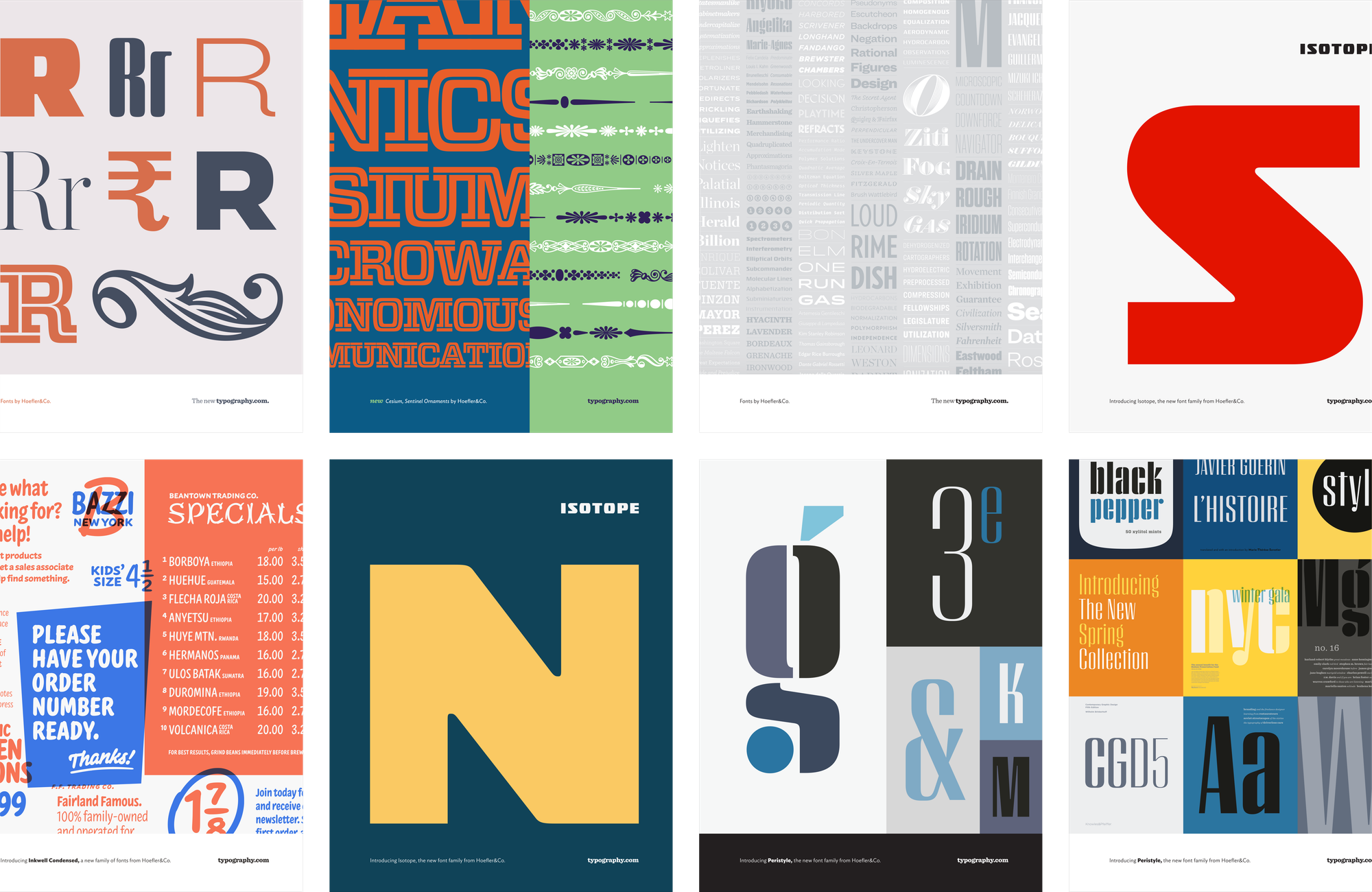
“I’ve been a working designer and creative leader in the graphic design industry for over two decades. Since 2008 I’ve played an influential role in shaping how the world chooses type, whether by creating inspirational artwork or developing new tools to help designers discover, try, and buy fonts with confidence.” That’s
Brian Hennings, former designer for the singular Hoefler&Co taking well earned credit for the influence his work and that of the Hoefler team has had on design, culture, and society at large. Through his personal site, Brian has published a thorough collection of his work that amplified Hoefler’s influence on designers worldwide and, I’m sure, product sales—with more to come.
In addition to gawking at the imagery, don’t miss the details that Brian leaves not only about the design, but his development work as well. For instance, this little tidbit in the email section, “A glimpse into the message source reveals web font implementation, light and dark mode support, and media queries to swap images based on screen size. In many instances, I altered the layout of desktop and mobile designs if it told the story or presented the type in a better way — a common technique for websites but really underutilized in email.”
If you’re not familiar with Hoefler & Co or you’d like to take a look back, listen to Design Better’s interview with studio founder Jonathan Hoefler and watch the typography episode of Abstract The Art of Design that features the studio and its work.
Published in Tacoma, Washington while watching the Seattle Seahawks maul the Carolina Panthers.
Member discussion